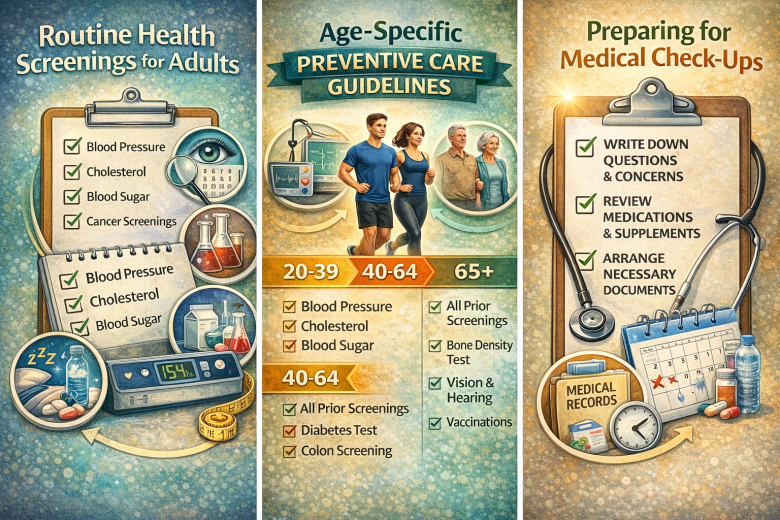
Health priorities evolve with age. Preventive care reflects this natural progression, adjusting focus as the body transitions through different life stages. Rather than applying identical screenings to everyone, medical guidelines often adapt recommendations according to age groups and individual risk factors.
In early adulthood, preventive visits commonly emphasize lifestyle foundations. Discussions may center on nutrition patterns, physical activity, sleep routines, and mental well-being. Baseline measurements taken during this stage serve as reference points for future comparisons. Establishing healthy habits early creates measurable stability over time.
During midlife, healthcare providers may suggest additional routine evaluations depending on personal and family history. Monitoring cardiovascular indicators, metabolic markers, and general organ function becomes increasingly relevant as natural physiological changes occur. These evaluations are not predictions of illness; they are structured tools used to observe trends.
In later adulthood, preventive care often expands to include bone health assessments, sensory evaluations such as vision and hearing checks, and mobility reviews. The aim is to preserve independence, functionality, and quality of life. At this stage, conversations frequently include fall prevention strategies and maintaining cognitive engagement.
Across all ages, preventive care remains individualized. Lifestyle habits, environmental factors, and genetic background influence recommendations. Two people of the same age may receive different guidance based on personal health history.
It is important to understand that preventive guidelines are continuously updated as scientific research evolves. Medical organizations regularly review evidence to refine recommendations. Adults benefit most when they rely on licensed healthcare professionals who apply these evidence-based frameworks.
Aging is not a problem to solve; it is a biological process to navigate wisely. Preventive care serves as a roadmap, helping individuals adapt responsibly as their bodies change over time.