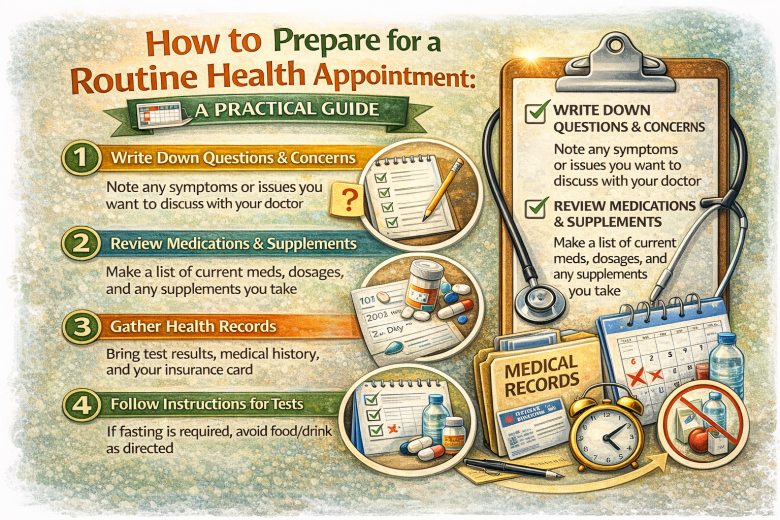
A preventive medical visit is most productive when patients arrive informed and organized. Preparation improves communication and allows healthcare professionals to conduct a more accurate and efficient evaluation.
Before an appointment, it is helpful to gather basic medical information. This may include a list of current medications or supplements, past procedures, family health history, and any recent test results. Having this information readily available reduces guesswork and supports clearer clinical assessment.
Tracking lifestyle habits in advance can also provide meaningful context. Recording sleep duration, exercise frequency, or dietary patterns for a few weeks offers concrete data rather than vague impressions. Healthcare providers often rely on patterns rather than isolated anecdotes when discussing wellness.
Adults may also prepare a short list of questions about general health maintenance. These questions can focus on preventive topics such as vaccination schedules, age-appropriate screenings, or strategies to improve daily habits. Writing questions down ensures important concerns are not forgotten during the visit.
Understanding common routine tests can reduce uncertainty. Blood pressure measurement, blood analysis, weight tracking, and basic physical examinations are standard components of many preventive visits. These procedures are typically straightforward and provide reference values for ongoing monitoring.
Equally important is open communication. Preventive appointments are not only about measurements; they are conversations. Honest discussion about stress levels, sleep quality, diet, and physical activity allows providers to offer informed guidance within professional boundaries.
After the appointment, reviewing any recommendations calmly and following up when needed helps maintain continuity of care. Preventive health is a long-term process, not a single event.
Approaching routine medical visits with preparation and awareness transforms them from formal check-ups into collaborative health planning sessions. Informed participation strengthens the partnership between adult patients and healthcare professionals, supporting steady and sustainable well-being.